
Dental implants
How a dental implant is placed, step by step
Written by Dr. Brunilda Topollaj ·
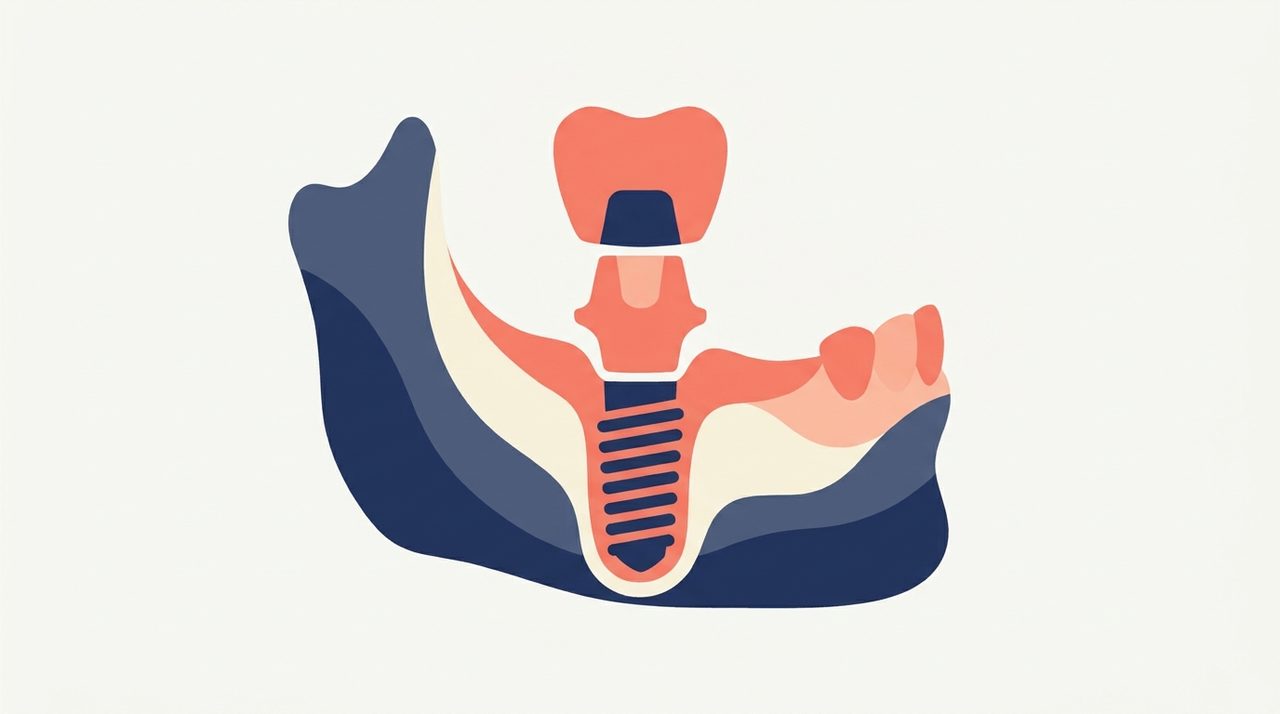
A dental implant is a small post, usually made of titanium, that is placed in the jawbone to replace the root of a missing tooth. A crown is later attached to it. Treatment is done in stages, and how long it takes depends on your bone, your health and how many teeth are being replaced.
Step 1: exam and planning
The dentist reviews your medical history, examines your teeth and gums and takes X-rays, sometimes a 3D scan, to see how much bone is available and where the implant can safely go. You agree a written plan before anything starts.
Step 2: placing the implant
The area is numbed with local anaesthesia. The dentist makes a small opening in the gum, prepares a space in the bone and places the implant. The gum is then closed with stitches. A single implant is often placed in one visit; more implants take longer.
Step 3: healing
Over the following weeks to months the bone grows around the implant and holds it firmly. This is called osseointegration. The dentist decides how long to wait. In selected cases a temporary tooth can be fitted on the day of surgery (immediate loading), but only when the bone and the bite allow it.
Step 4: abutment and crown
When the implant is stable, a small connector called an abutment is attached. The dentist takes an impression or scan, and the laboratory makes the crown. At the fitting, the crown is checked for fit, colour and bite before it is fixed in place.
Step 5: follow-up and care
Clean around an implant as carefully as around natural teeth: brush twice a day, clean between the teeth once a day and keep your check-ups. Gum disease around an implant can threaten it, so regular visits matter.
When treatment may need extra steps
An implant cannot be placed safely if there is untreated gum disease, and a bone graft may be needed when there is too little bone. Smoking and some health conditions can affect healing, which is why the dentist asks about your health before planning.
What to expect on the day
You can usually go home the same day. Eat soft food and avoid very hot or hard food while the area is numb, keep the area clean as instructed and avoid smoking, which slows healing. Plan to rest for the rest of the day, and contact the clinic if pain, swelling or bleeding is greater than you were told to expect.
Questions to ask your dentist
- How much bone do I have, and do I need a graft?
- How many stages will treatment have, and how long between them?
- What is included in the price, and what is not?
- What follow-up will I have after the crown is fitted?
Common questions
Does it hurt? The placement is done under local anaesthesia. Afterwards, swelling and tenderness for a few days are common, and the dentist gives written instructions.
How many visits will I need? It depends on the case: planning, placement, one or more check-ups during healing, and the crown fitting.
Can I have a tooth the same day? Sometimes, with immediate loading, but only if the dentist confirms it is suitable after the exam and X-ray.
About your dentist
Dr. Brunilda Topollaj holds a Level II Master in Advanced Oral Surgery, Implants and Prosthetics from UniCamillus (Rome) and has clinical training on the Matrix Implant System at the University of Zurich.
Cost
Prices are "starting from", and the final cost is set by the doctor after the exam and X-ray. See the prices page and the medical tourism page if you are travelling for treatment. To learn more, read about dental implants or book a visit for an exam.
Do you have a question about your teeth?
Book a visitRelated articles
Oral surgery
Wisdom tooth removal: when it is needed
Not every wisdom tooth has to come out. Learn when removal is considered, how the procedure works, what recovery is like and the warning signs.
Cosmetic dentistry
Dental veneers: what they are and who they suit
Veneers are thin shells bonded to the front of teeth. Learn the types, who they suit, how treatment works and what to ask your dentist.