
Cosmetic dentistry
Dental veneers: what they are and who they suit
Written by Dr. Brunilda Topollaj ·
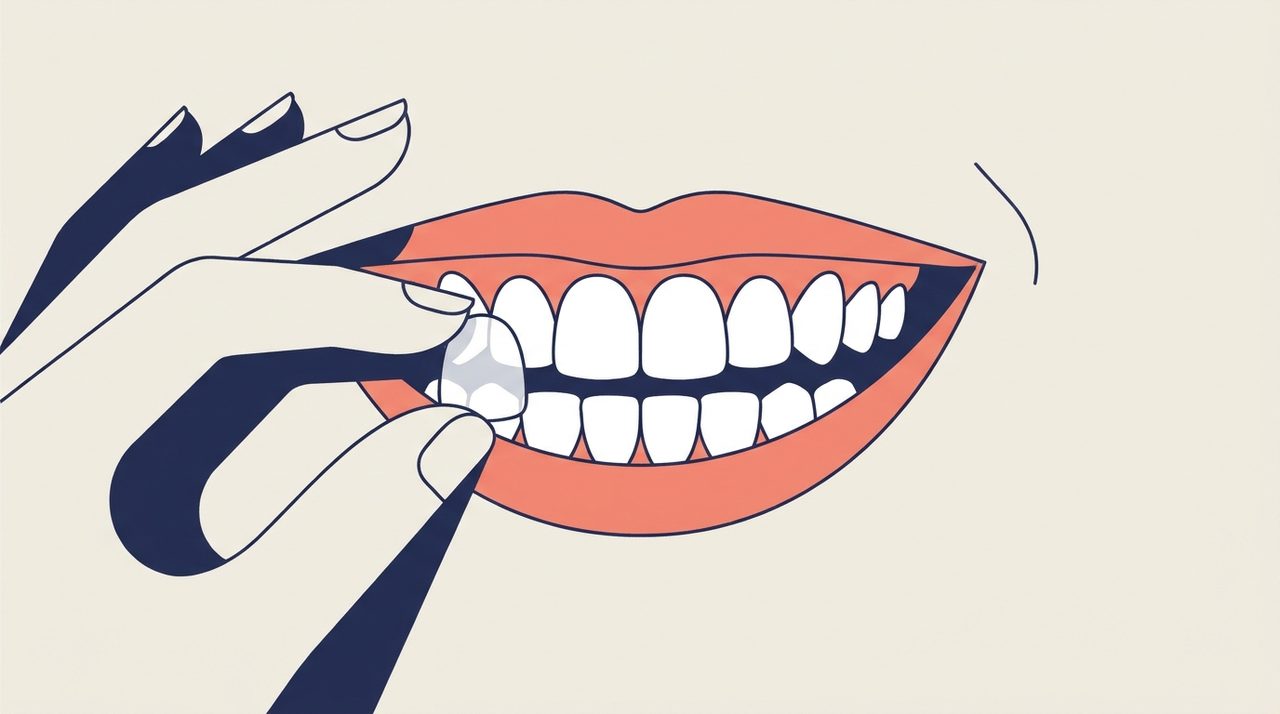
A dental veneer is a thin shell, made of ceramic or composite resin, that is bonded to the front surface of a tooth. Dentists use veneers to change the colour, shape or length of a tooth, or to close small gaps. Whether veneers suit you depends on the health of your teeth and gums, which only an exam can show.
What a veneer does
A veneer covers the visible side of a tooth, much like a false nail covers a fingernail, except that it is fixed to the tooth permanently. It is a cosmetic and restorative treatment: it can hide stains that do not respond to whitening, repair a chipped edge, or even out teeth that are slightly uneven.
Ceramic and composite veneers
- Ceramic veneers are made to measure in a dental laboratory from a model of your teeth. They are usually bonded after a thin layer of enamel has been removed, so that the veneer sits flush with the neighbouring teeth.
- Composite veneers are built up directly on the tooth with tooth-coloured resin, usually in a single visit. They are normally less costly than ceramic veneers, and they are shaped and polished by the dentist at the chair.
Which material is better depends on how much of the tooth needs to change, your budget and how you want the result to look. The dentist explains the options after examining you.
Who veneers may suit
Veneers are often considered for people who have:
- teeth that are stained or discoloured in a way whitening does not fix,
- small chips or worn edges,
- slightly uneven, short or misshapen teeth,
- small gaps between teeth.
Who they may not suit
Veneers are not a good choice when there is untreated decay or gum disease, because these must be treated first. People who grind their teeth heavily need a plan to protect the veneers, such as a night guard. Veneers are also not meant to replace a tooth that is badly broken; in that case a crown is usually the better option.
How treatment works
- Exam and planning. The dentist checks your teeth and gums, may take X-rays and discusses the shape and shade you want.
- Preparation. For ceramic veneers, a small amount of enamel is removed, usually with local anaesthesia if needed. An impression or scan is taken.
- Fitting. The laboratory makes the veneers, and a temporary may be used in the meantime. At the next visit the dentist checks the fit and colour before bonding each veneer to the tooth.
- Follow-up. A later check makes sure the bite is comfortable and the veneers are in good condition.
Each veneer is planned tooth by tooth after the exam, so the number of visits depends on your case.
Looking after veneers
Brush twice a day, clean between your teeth once a day and keep up regular check-ups, exactly as you would with natural teeth. Avoid biting very hard objects such as ice or pen caps. Veneers do not change colour with whitening products, so any whitening should be done before the shade is chosen.
Cost
Ceramic veneers at Dental Solution Clinic start from €180 each. The final cost is set by the doctor after the exam. Travel, hotel and transfer are not included unless your treatment plan is above €3,000; see the prices page for what is included. If you are travelling for treatment, the medical tourism page explains how to request a quote.
Common questions
Do veneers hurt? Bonding itself is not usually painful. When enamel is removed, the dentist can use local anaesthesia. Some sensitivity afterwards is possible and normally settles.
How long do veneers last? It depends on the material, your oral hygiene and habits such as grinding. The dentist will tell you what to expect for your case.
Can a veneer be repaired? Small chips can sometimes be repaired; a veneer that is badly damaged is usually replaced.
To find out whether veneers are right for you, book a visit for an exam, or read about prosthetic treatment.
Do you have a question about your teeth?
Book a visitRelated articles
Oral surgery
Wisdom tooth removal: when it is needed
Not every wisdom tooth has to come out. Learn when removal is considered, how the procedure works, what recovery is like and the warning signs.
Dental implants
How a dental implant is placed, step by step
A dental implant replaces the root of a missing tooth. See the steps from the first exam to the final crown, and what healing involves.