
Oral surgery
Wisdom tooth removal: when it is needed
Written by Dr. Brunilda Topollaj ·
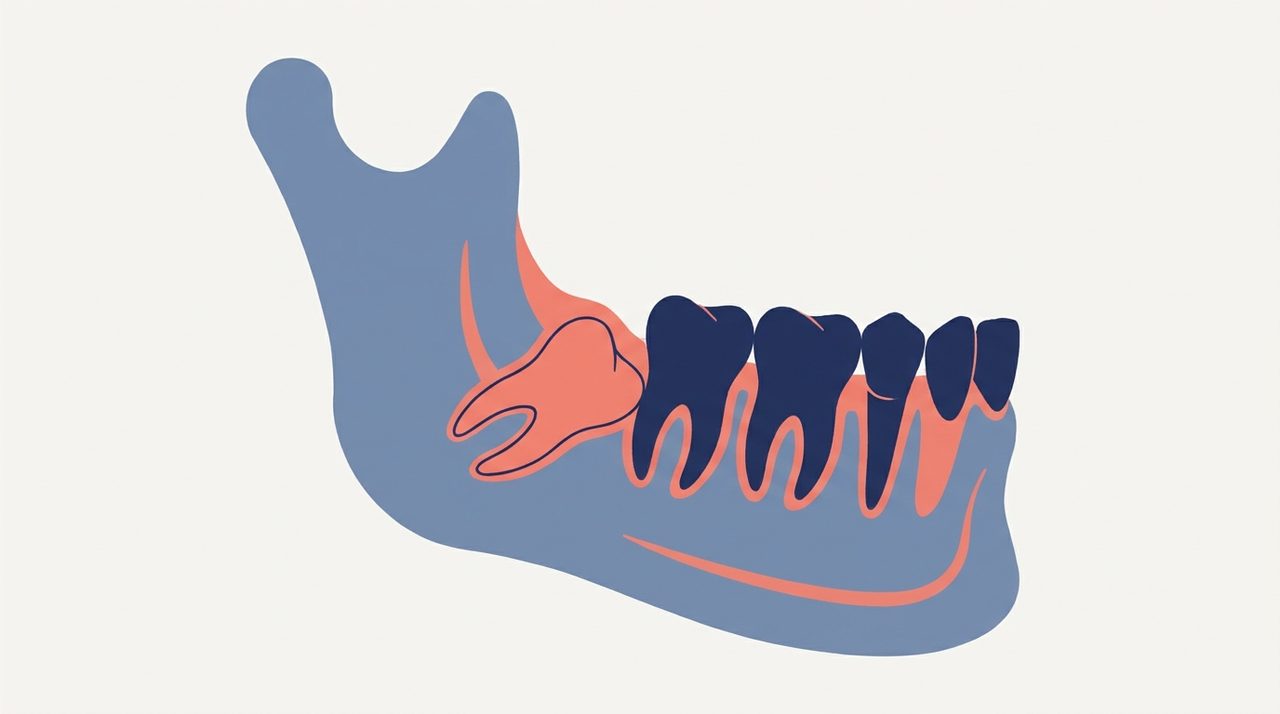
Wisdom teeth are the last molars at the back of the mouth, and they usually appear between the late teens and the mid-twenties. Not every wisdom tooth has to be removed. Removal is considered when a tooth is stuck under the gum or bone, causes pain or infection, damages the tooth in front of it or cannot be kept clean. An exam and an X-ray show which applies to you.
Why wisdom teeth cause problems
The jaw often has too little room for the third molars. A wisdom tooth may then come through at an angle, only partly emerge, or stay trapped in the bone. Teeth that are partly covered by gum are hard to clean, so food and bacteria collect around them.
When removal is considered
- The tooth is impacted, meaning it is stuck under the gum or bone and pushing on the next tooth.
- Repeated infection of the gum around a partly erupted tooth, a condition called pericoronitis.
- Decay in the wisdom tooth, or in the tooth in front of it where the two meet.
- Damage to neighbouring teeth or bone, such as a cyst seen on the X-ray.
- Other treatment plans, for example when the tooth would interfere with orthodontic or prosthetic work.
When a wisdom tooth can stay
A wisdom tooth that is fully through the gum, healthy, can be cleaned properly and causes no symptoms is often kept and monitored with regular check-ups.
How the procedure works
- Exam and X-ray. A panoramic X-ray shows the position of the tooth and its roots.
- Anaesthesia. The area is numbed with local anaesthesia.
- Removal. For an impacted tooth the dentist opens the gum, and may divide the tooth into pieces to remove it gently. Stitches are sometimes used.
- Instructions. You receive written aftercare instructions before you leave.
Recovery
Some swelling and tenderness for a few days is common. Eat soft food, keep your mouth clean as the dentist instructs, avoid smoking and do not rinse hard in the first hours. Follow the instructions you are given, since they are tailored to your case.
Warning signs
Contact the clinic if pain increases after the first days, swelling keeps growing, you have a fever, a bad taste or pus, or bleeding that does not stop. A painful empty socket a few days after removal can be a sign of a problem called dry socket and needs a check.
Questions to ask your dentist
- Does the X-ray show that my wisdom tooth needs to come out?
- Can any be kept and monitored instead?
- How many can be treated in one visit?
- What are the risks in my case, and what happens afterwards?
Common questions
Does it hurt? The procedure is done under local anaesthesia. You may feel pressure but should not feel pain. Soreness afterwards is normal.
Can all four be removed at once? Sometimes, depending on their position and your health. The dentist will advise.
Is it risky? Like any surgery, it has possible risks such as infection, dry socket or, rarely, irritation of a nerve. The dentist reviews these for your case before treating you.
Before and after the day of removal
Before the visit, tell the dentist about any medicines you take and any health conditions, and eat normally unless you are told otherwise. Plan a quiet rest of the day afterwards and arrange for someone to accompany you home if you wish. In the following days, the dentist may check the area and remove stitches if they were used. Most people return to normal activities within a few days, but the pace of healing varies from person to person.
Dr. Brunilda Topollaj holds a Level II Master in Advanced Oral Surgery, Implants and Prosthetics from UniCamillus (Rome). To find out whether your wisdom teeth need treatment, book a visit, or read about oral surgery at the clinic. See the prices page for costs.
Do you have a question about your teeth?
Book a visitRelated articles
Dental implants
How a dental implant is placed, step by step
A dental implant replaces the root of a missing tooth. See the steps from the first exam to the final crown, and what healing involves.
Cosmetic dentistry
Dental veneers: what they are and who they suit
Veneers are thin shells bonded to the front of teeth. Learn the types, who they suit, how treatment works and what to ask your dentist.